
Author: Shrika Chatta
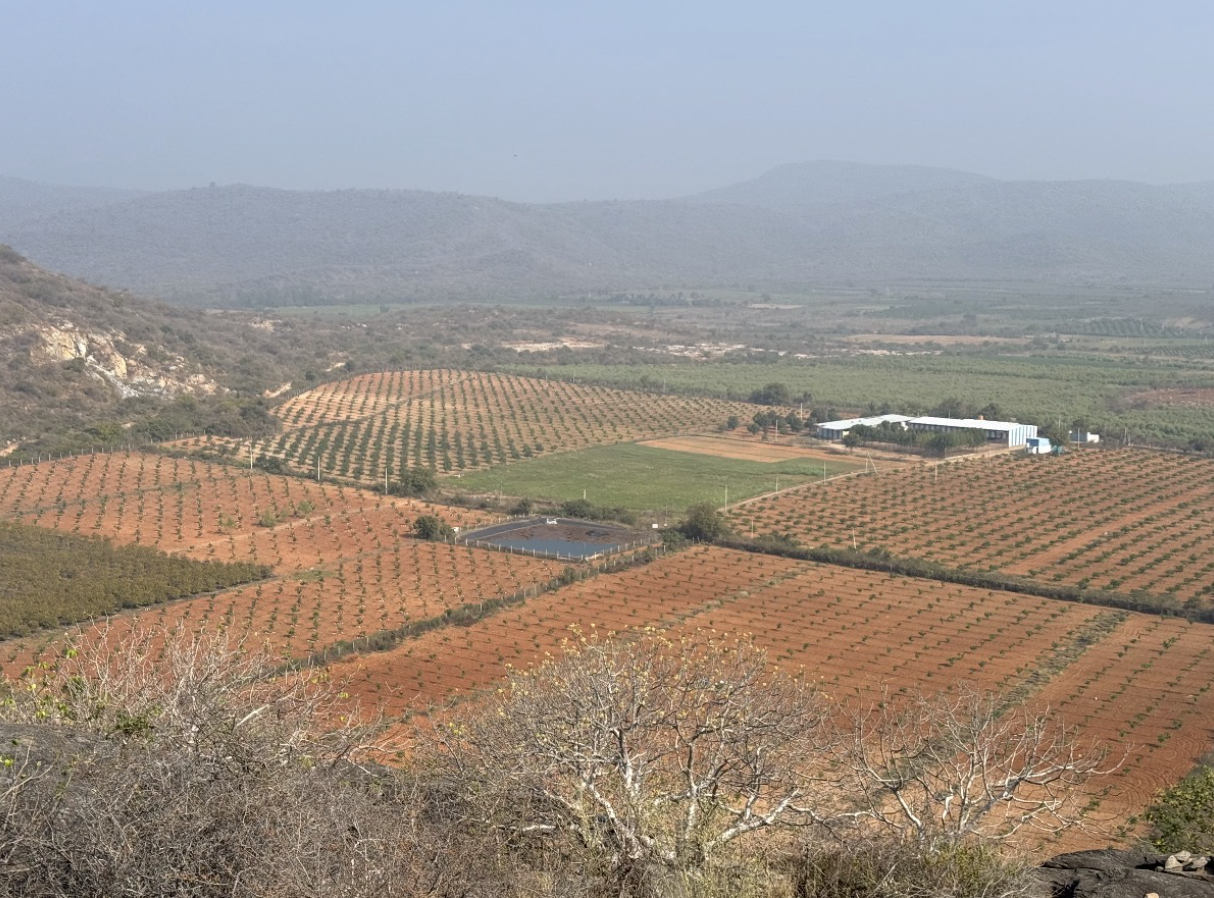
Every morning at 4:00 a.m., my uncle’s farm in Narasaraopet, Andhra Pradesh, comes to life. The daily routine is physically demanding: livestock must be tended to, sheep and hens released, and the land prepared for a long day of maintenance. The farm produces a beautiful array of crops, including green oranges, custard apples, dragon fruit, papayas and Java plums. However, despite this relentless schedule, the farm’s net annual savings after covering basic expenses, such as livestock feed, fuel, utilities, worker salaries and fertilizers, amount to merely 169,055 Indian rupees (~$1,800 USD).
This precarious financial margin is the reality for millions of small-scale farmers across India. Today, the greatest threat to their livelihood isn’t just fluctuating market prices; it is the vanishing water beneath their feet.
Agriculture accounts for nearly 90% of India’s freshwater use, making the country the single largest user of groundwater in the world (FAO 2017). In fact, 60% of its total irrigation relies entirely on underground aquifers, which are porous layers of rock and sediment that store water deep below the surface. On my uncle’s farm, this dependence has reached a breaking point. Over the years, his family has had to drill 22 different bore wells just to secure a reliable water supply. Today, only 8 of those wells are still functional, and the rest represent a massive unrecoverable financial loss. As my uncle, Kishore Naidu Chatta, noted, “Water has become the most uncertain part of farming. Even after investing in multiple bore wells, there is no guarantee that water will be available when crops need it.”
Ironically, this crisis has been accelerated by technology originally meant to help. The widespread adoption of cheap, solar-powered irrigation pumps allows farmers to pump water all day without fuel costs. However, without proper regulation, this limitless pumping rapidly depletes vital aquifers (Pearce 2024).
To combat this, farmers can implement digital agriculture and precision irrigation. The farm currently mitigates water instability by pumping groundwater from functioning wells into a man-made storage pond to regulate supply before distributing it through drip systems. However, a fully optimized system takes this system further by combining soil monitoring with automated controllers.
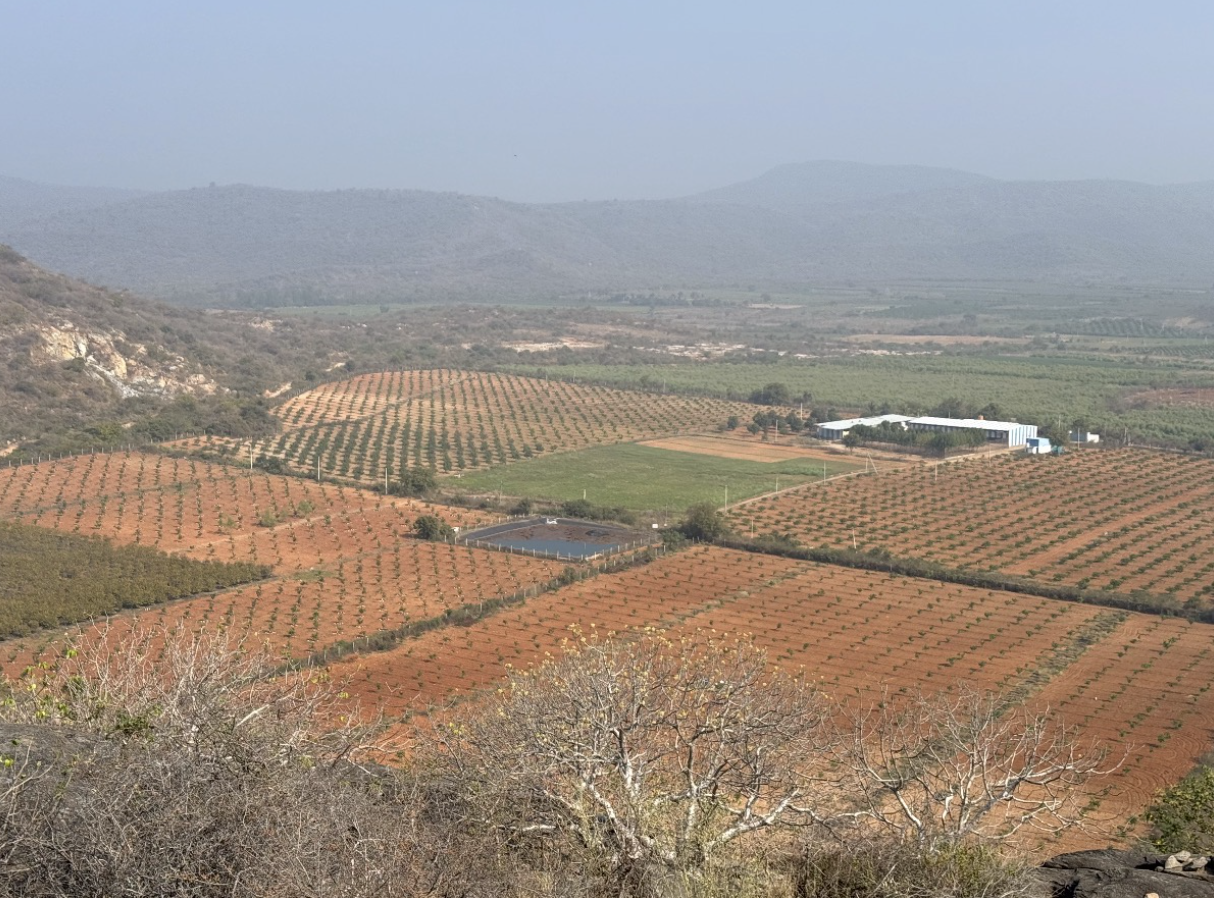
Figure 1. Aerial view of the Narasaraopet farm layout in Andhra Pradesh (2023), featuring the central groundwater storage pond.
On farms growing crops in slightly acidic soils (pH ~6.5), soil moisture requirements vary significantly by root structure. Papaya plants have shorter roots and require higher soil moisture levels (20-25%), whereas longer-rooted fruit trees thrive at 15-20%. When moisture drops below these specific thresholds, automated microcontrollers open valves to deliver water directly to plant roots, drastically reducing evaporation waste. By integrating local evapotranspiration data, which tracks water loss from soil and plant transpiration, the system automatically adjusts irrigation frequency to match Andhra Pradesh’s high summer temperatures and fluctuating monsoon cycles.
To translate these technical mechanisms into an accessible reality for small-scale operations, I developed a practical framework called the Integrated Smart Irrigation Network (ISIN) model:
Sensor-Based Automation: Utilizing low-cost soil moisture sensors, microcontrollers and mobile applications to allow farmers to monitor conditions and control irrigation remotely.
Infrastructure Optimization: Expanding man-made farm ponds to capture seasonal monsoon runoff, which recharges local aquifers and provides a reliable buffer during dry periods.
Community Education: Partnering with local organizations to train farming communities on water budgeting, system maintenance and data sharing.
This approach isn't just a utopian theory. Field assessments show that precision micro-irrigation systems can cut agricultural water consumption by 30-50% while boosting crop yields by up to 20% compared to traditional flood irrigation (World Bank 2012; Samdani 2025). Furthermore, state-led water programs in Andhra Pradesh, such as the Amarajeevi Jaladhara Project, the Jal Jeevan Mission 2.0 and Magic Drains, alongside grassroots efforts like the Paani Foundation, demonstrate that combining infrastructure with digital tools creates real long-term resilience (Express News Service 2025; Sambasiva Rao 2025). By blending community-led projects with accessible tech, we can ensure that efforts to solve global food insecurity start where it matters most: on family farms.
References:
Express News Service (2025) Andhra Pradesh DY CM lays foundation for 1.55 lakh farm ponds, The New Indian Express. Available at: https://www.newindianexpress.com/states/andhra-pradesh/2025/Mar/23/andhra-pradesh-dy-cm-lays-foundation-for-155-lakh-farm-ponds (Accessed: 21 July 2026).
FAO (2017) Water for sustainable food and agriculture, Food and Agriculture Organization of the United Nations. Available at: https://openknowledge.fao.org/server/api/core/bitstreams/b48cb758-48bc-4dc5-a508-e5a0d61fb365/content (Accessed: 21 July 2026).
India groundwater: A valuable but diminishing resource (2012) World Bank Group. Available at: https://www.worldbank.org/en/news/feature/2012/03/06/india-groundwater-critical-diminishing (Accessed: 21 July 2026).
MN, S. (2025) Automation-based micro irrigation systems launched for AP Farmers, The Times of India. Available at: https://timesofindia.indiatimes.com/city/vijayawada/automation-based-micro-irrigation-systems-launched-for-ap-farmers/articleshow/125522971.cms (Accessed: 21 July 2026).
Pearce, F. (2024) How a Solar Revolution in Farming Is Depleting World’s Groundwater, Yale Environment 360. Available at: https://e360.yale.edu/features/solar-water-pumps-groundwater-crops (Accessed: 21 July 2026).
Sambasiva, R.M. (2025) ‘Magic Drain’ shows promise in rural sanitation at Somavaram, The Hindu. Available at: https://www.thehindu.com/news/national/andhra-pradesh/magic-drain-shows-promise-in-rural-sanitation-at-somavaram/article70056638.ece (Accessed: 21 July 2026).